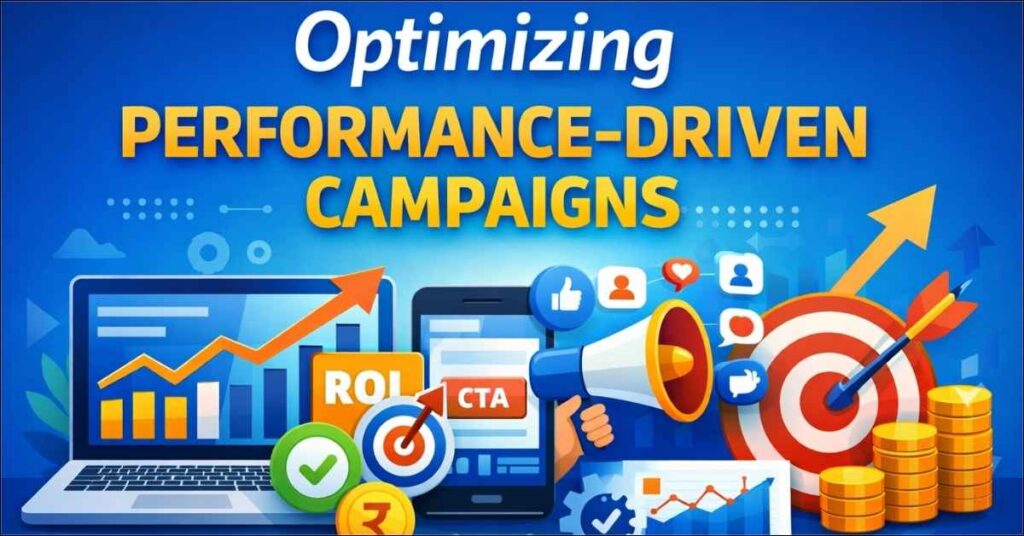
In today’s digital marketing ecosystem, running ads is easy – but running high-performing, ROI-focused campaigns is where the real challenge lies. Performance-driven campaigns focus on measurable results such as leads, sales, app installs, or conversions rather than just impressions or reach.
This guide will walk you through proven strategies to optimize performance-driven campaigns and ensure every marketing rupee works harder for your business.
What Are Performance-Driven Campaigns?
Performance-driven campaigns are digital advertising efforts designed to achieve specific business goals such as:
- Lead generation
- Sales and revenue
- Website conversions
- App installs
- Form submissions
Unlike branding campaigns, performance marketing is data-centric and depends heavily on tracking, testing, and continuous optimization.
1. Define Clear Campaign Objectives
Before launching any campaign, set SMART goals:
- Increase conversions by 20%
- Reduce cost per lead (CPL) by 15%
- Achieve ROAS of 4x
Clear objectives help choose the right platform, targeting strategy, and ad format.
2. Use Precise Audience Targeting
Audience targeting is the backbone of campaign performance.
Best practices:
- Create buyer personas
- Use custom audiences (website visitors, email lists)
- Build lookalike audiences
- Segment by interests, behavior, and demographics
Tip: Exclude irrelevant audiences to reduce wasted ad spend.
3. Optimize Ad Creatives for Conversions
Your ad creative must:
- Address a pain point
- Show a clear benefit
- Include a strong Call-to-Action (CTA)
Examples of strong CTAs:
- “Get a Free Demo”
- “Download Now”
- “Book Your Consultation”
Use A/B testing on:
- Headlines
- Images/videos
- Ad copy
- CTA buttons
4. Improve Landing Page Performance
Even the best ad fails if the landing page doesn’t convert.
Key landing page optimization tips:
- Fast loading speed
- Clear headline and value proposition
- Simple form (minimum fields)
- Mobile-friendly design
- Trust elements (testimonials, reviews, certifications)
Ensure message consistency between ad and landing page.
5. Track and Measure the Right Metrics
Monitor metrics that directly affect performance:
- Conversion Rate (CR)
- Cost Per Click (CPC)
- Cost Per Acquisition (CPA)
- Return on Ad Spend (ROAS)
- Click Through Rate (CTR)
Use tools such as:
- Google Analytics
- Google Tag Manager
- Meta Pixel
- Conversion APIs (CAPI)
Read this article also:
👉 How to Set Up Facebook Conversion API (CAPI): Step-by-Step Guide
6. Continuous Testing and Optimization
Optimization is an ongoing process:
- Pause under-performing ads
- Scale winning campaigns
- Adjust bids and budgets
- Refresh creatives every 2-3 weeks
- Test new audiences regularly
Small changes can result in big performance improvements over time.
7. Leverage Automation and AI Tools
Modern platforms use AI to optimize delivery:
- Google Performance Max
- Meta Advantage+ campaigns
- Automated bidding strategies
- Smart creatives
Automation helps improve efficiency while reducing manual effort.
Conclusion
Optimizing performance-driven campaigns is not a one-time task – it’s a continuous cycle of testing, learning, and improving. By setting clear goals, targeting the right audience, using compelling creatives, and tracking performance metrics, businesses can achieve higher conversions and better ROI.
Success lies in data-driven decisions and consistent optimization.