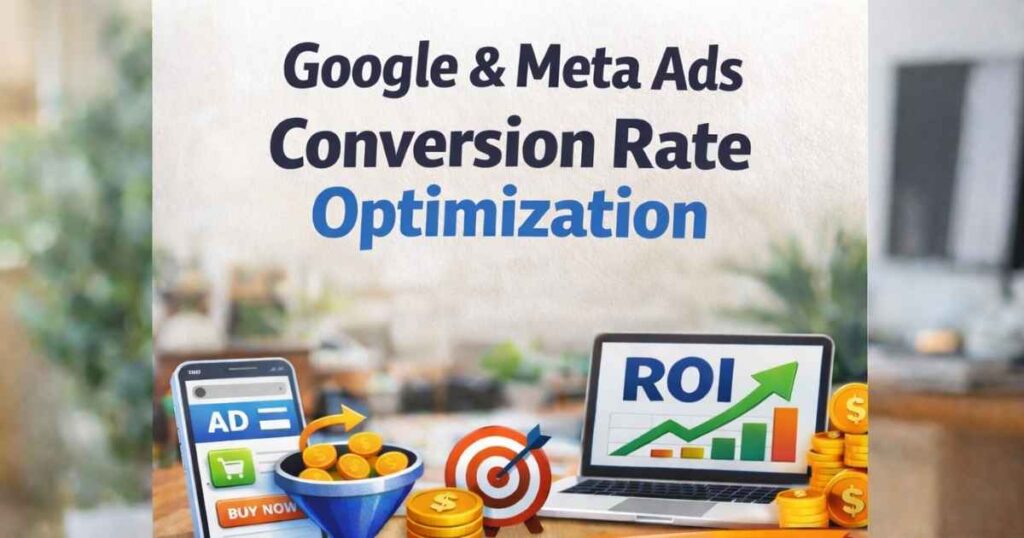
Running Google Ads and Meta (Facebook & Instagram) Ads is easy – but converting clicks into customers is the real challenge. This is where Conversion Rate Optimization (CRO) plays a critical role.
Conversion Rate Optimization focuses on improving every step of the user journey – from ad copy to landing page – to ensure more users take the desired action, such as filling a form, making a purchase, or booking a call.
In this guide, we’ll explore practical CRO strategies for Google and Meta Ads that help you reduce cost per conversion and maximize ROI.
What Is Conversion Rate Optimization (CRO) in Paid Ads?
CRO is the process of increasing the percentage of users who complete a goal after clicking your ad.
Formula:
Conversion Rate = (Conversions ÷ Clicks) × 100
Even a 1% improvement in conversion rate can significantly reduce your ad spend while increasing revenue.
Why CRO Is Crucial for Google & Meta Ads
- Rising Cost Per Click (CPC)
- High competition in auctions
- Limited ad budgets
- Algorithm favors high-quality experiences
Platforms like Google and Meta reward ads with better relevance, engagement, and landing page experience, resulting in:
- Lower CPC
- Higher Quality Score
- Better ad delivery
Key CRO Strategies for Google Ads
1. Match Ad Intent with Landing Page Content
Ensure your landing page exactly reflects the search intent.
Example:
If the keyword is “Buy electric chimney online”, your page should:
- Show product price
- Display trust badges
- Offer fast checkout
2. Improve Page Load Speed
A 1-second delay can reduce conversions by 7%.
Tools you can use:
- Google PageSpeed Insights
- GTmetrix
📘 Landing Page Optimization Book
3. Use Clear Call-to-Action (CTA)
High-performing CTAs:
- “Get Free Quote”
- “Book a Free Demo”
- “Limited-Time Offer”
Avoid generic CTAs like Submit.
CRO Strategies for Meta (Facebook & Instagram) Ads
1. Creative Testing Is Mandatory
Meta Ads performance depends heavily on visuals.
Test:
- Static images
- Carousels
- Short-form videos
- UGC-style creatives
2. Optimize for the Right Event
Choose conversion events wisely:
- Lead → Form Submit
- E-commerce → Purchase
- Services → Book Appointment
Avoid optimizing for traffic when conversions matter.
3. Use Social Proof
Add:
- Reviews
- Testimonials
- Star ratings
- Client logos
Social proof increases trust and conversions instantly.
Landing Page CRO Best Practices (For Both Platforms)
Must-Have Elements:
- Strong headline with keyword
- Clear value proposition
- Mobile-first design
- Minimal form fields
- Trust badges (Google, Meta, SSL)
A/B Testing: The Backbone of CRO
Always test:
- Headlines
- CTA buttons
- Colors
- Form length
- Ad creatives
Run tests for at least 7–14 days before concluding results.
Common CRO Mistakes to Avoid
❌ Sending traffic to homepages
❌ Ignoring mobile users
❌ No thank-you page tracking
❌ Poor message match
❌ One creative forever
Conclusion
Google and Meta Ads Conversion Rate Optimization is not optional – it’s essential. Instead of increasing your ad budget, focus on optimizing what you already have.
A well-optimized funnel ensures:
- Lower cost per lead
- Higher ROAS
- Scalable growth
If you consistently test, analyze, and optimize, CRO will become your biggest competitive advantage in paid advertising.