In today’s digital marketing world, tracking methodologies are essential for understanding how users interact with your campaigns and website. Proper tracking allows marketers to measure conversions, optimize campaigns, and make data-driven decisions. Two widely used tracking approaches are Floodlight tagging and campaign tracking parameters.
To understand how tracking impacts campaign performance and ROI, also read our detailed guide on
👉 Google & Meta Ads Conversion Rate Optimization
What Are Tracking Methodologies?
Tracking methodologies refer to the systems and techniques used to monitor user behavior and campaign performance. They help businesses understand which marketing efforts are effective and which need optimization. Common objectives include:
- Tracking website visits and user interactions
- Measuring conversions, sales, or leads
- Understanding campaign ROI
- Optimizing ad spend across channels
Floodlight Tagging: Tracking Conversions Effectively
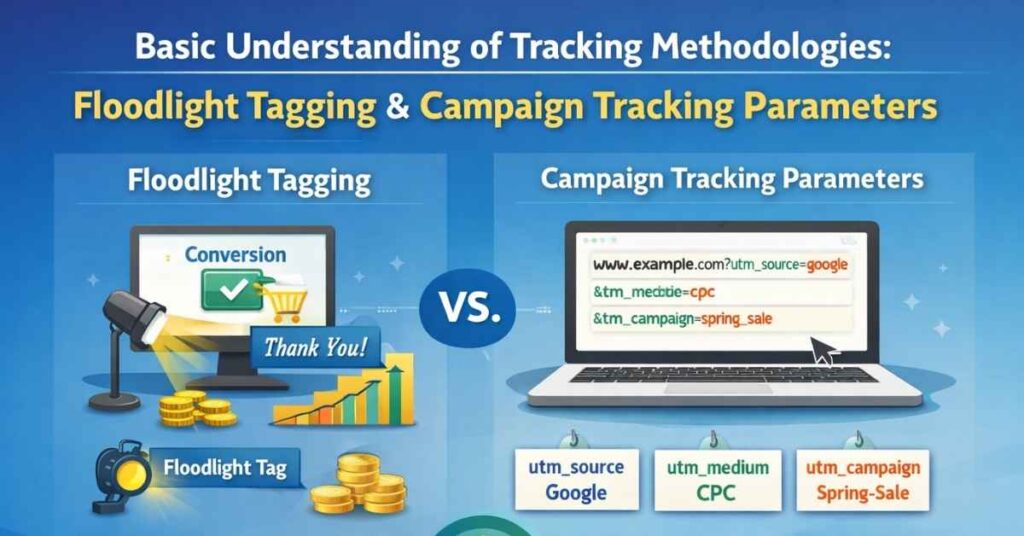
Floodlight tags are a type of conversion tracking tag used in Google Marketing Platform, primarily within Campaign Manager 360. These tags track specific user actions, such as:
- Completing a purchase
- Submitting a contact form
- Signing up for a newsletter
Floodlight tagging works by placing a small snippet of code on your website’s conversion pages. When a user completes the defined action, the tag fires, sending data back to your reporting platform. Key benefits include:
- Detailed conversion reporting
- Customizable tracking based on goals
- Integration with other Google marketing tools
Pro Tip: Properly set up Floodlight tags ensure accurate attribution, which is crucial for evaluating your campaigns’ effectiveness.
Campaign Tracking Parameters: Measuring Traffic Sources
Campaign tracking parameters (also known as UTM parameters) are tags added to URLs to track the source, medium, and campaign name. For example:
https://www.gskdigi.in?utm_source=facebook&utm_medium=cpc&utm_campaign=spring_sale
Here’s what each parameter does:
- utm_source: Identifies the traffic source (e.g., Facebook, Google, newsletter)
- utm_medium: Specifies the channel type (e.g., CPC, email, social)
- utm_campaign: Tracks the specific marketing campaign
These parameters are vital for platforms like Google Analytics to analyze which campaigns drive traffic, engagement, and conversions.
Benefits of campaign tracking parameters:
- Easy to implement and flexible
- Provides granular insights into campaign performance
- Helps optimize marketing spend
If you are running eCommerce campaigns, you can explore a practical implementation example in our guide on
👉 How to Set Up Conversions for a Shopify Site
How Floodlight Tagging and Campaign Parameters Work Together
While Floodlight tags track specific actions, campaign tracking parameters track the journey leading up to those actions. Together, they provide a comprehensive view of the user lifecycle, from first click to conversion.
Example Scenario:
- User clicks on a Facebook ad with UTM parameters.
- User lands on your website and browses products.
- Completes a purchase, triggering a Floodlight tag.
This combination ensures that marketers can attribute the conversion to the correct campaign, channel, and ad.
Best Practices for Effective Tracking
- Plan your tracking strategy: Define your conversion goals before implementation.
- Test tags thoroughly: Ensure Floodlight tags and UTM parameters are firing correctly.
- Maintain consistent naming conventions: For campaigns, mediums, and sources.
- Regularly audit your tracking setup: Avoid broken tags or incorrect reporting.
Using the right tools is essential for validating tags and campaign parameters. Check out our list of
👉 Free Google SEO Tools for Marketers to test, analyze, and optimize your tracking setup.
Conclusion
Understanding tracking methodologies, including Floodlight tagging and campaign tracking parameters, is critical for any marketer looking to optimize digital campaigns. By correctly implementing these tools, you can gain actionable insights, measure ROI accurately, and improve your marketing performance.